One of our carrier partners – John Hancock – recently launched LifeCare (Hybrid LTC), an innovative addition to AgencyONE’s hybrid long-term care (LTC) offerings. This hybrid Indexed UL with LTC benefitsis designed for clients seeking a policy that provides multiple advantages: more growth, more choice, and more tax-favored treatment. LifeCare stands out from other carriers as it incorporates an indexed chassis, which may enhance future benefits based on positive index performance.
This product review will cover product specifications, underwriting paths, LTC payment options, pricing competitiveness, index options, and state availability.
Product Specifications
Issue ages: 30-75
Underwriting classes: 4 total (3 nonsmoker, 1 smoker)
Rated clients eligible
Couples discount available (only one applicant required to qualify)
Vitality program available to enhance policy value
Death benefit range: $50,000 – $500,000
Benefit periods: 2, 4, or 6 years
Premium payment options: 1, 5, 10, or 15 years
Inflation rider: 5% option available (6-year benefit period only)
John Hancock offers two underwriting paths for LifeCare submissions.
Instant Underwriting Decision – In-good-order applications typically receive an approval within 5-7 business days.
Referral to Underwriter – Additional review may be required for medical history clarification, outstanding evidence checks, or medical records.
LifeCare applications are digitally processed onlyvia iGO. Once submitted, an email will be received within minutes that confirms the chosen underwriting path. See attached Pre-Qualification Guide for more information.
LTC Payment Options
LifeCare provides flexibility in how your clients receive benefits while most other carriers only offer one or the other.
Cash Indemnity – Clients receive 100% of their benefit payments as a set monthly amount, up to the monthly IRS per diem limit, without the need to submit receipts.
Reimbursement – If the qualified LTC expenses exceed the monthly IRS per diem limit, clients can submit invoices for reimbursement or arrange direct payments to care providers while avoiding the need to submit proof of payment, receive funds, and make payments.
Pricing & Competitiveness
LifeCare’s performance is difficult to compare to other products. Most hybrid options use a fully guaranteed benefit for 4-6 years with some type of inflation rider (either 3% or 5%). LifeCare differs from these traditional hybrid LTC products by relying on indexed performance for potential benefit increases.
Key considerations are:
Guaranteed initial benefit with growth potential based on index performance.
Vitality program (Silver, Gold, Platinum) can further enhance policy value.
Best pricing occurs with the 4-year benefit period.
Index Options
LifeCare offers 3 indexed options for you to choose from based on your clients’ needs:
Select Capped Indexed Account: Current cap rate is 8%, guaranteed multiplier is 32%
High Capped Indexed Account: Current cap rate is 10.50%, guaranteed multiplier is 45%
Barclays Global Multi Asset Classic Indexed Account: no Current cap and a 170% Participation Rate.
State Availability
LifeCare is approved in all states except:
Not available in: CA, CT, DE, DC, FL, GU, IN, MT, NJ, NY, ND, PR, SC, SD.
Contact the AgencyOne case design team at 301.803.7500 for more information and to obtain detailed illustrations based on your case parameters.
A recent article in On the Risk, written by RGA Reinsurance and MIB, estimated that the insurance industry loses $75 billion annually to fraud. This impacts both policyholders (higher premiums) and insurance and reinsurance carriers!
The Impact of Accelerated Underwriting
The advent of Accelerated Underwriting has only increased this number, as there is now less direct agent involvement in the process. While the industry relies increasingly on computer and electronic applications that are completed by clients, telephone interviews, and para-medical services,there is more of a chance for client non-disclosures. These non-disclosures may still result in policies being issued, but advisors remain responsible for the representations in the policy.
This makes your field underwriting more important than ever. Thoroughly preparing clients for the application process—including the insurance exam, interview, and entire underwriting procedure—is crucial in achieving accuracy and preventing non-disclosures. Reading the whole question…answering with the whole truth.
Smoker or Nonsmoker? “They’ll Never Find Out.”
If nicotine is present in the urine of a client who admitted “no tobacco use” on an application or exam, they will be assessed SMOKER rates. The client will not be reconsidered for a non-tobacco class if pivoted to another carrier for 12+ months.
This is the case even if that carrier would have otherwise considered nonsmoker rates. The rationale is simple: if clients don’t tell the truth on this matter, the carrier may be wondering what else they could be hiding.
For example:
An occasional cigar user might still qualify for nonsmoker status within certain carrier guidelines—even with nicotine present in the urine test—if the client disclosedqualifying tobacco use upfront.
A non-disclosure, however, inhibits the advisor from sending the case to another carrier as they would have no choice but to offer tobacco rates.
Underwriting: The Importance of Full Disclosure
At AgencyONE, we cannot emphasize enough the importance of honest and complete disclosure. Only a handful of carriers allow nonsmoker rate classifications for applicants who test positive for nicotine and admit use of tobacco products. We know these carriers and we specialize inmatching clients to the best carriers for their tobacco use history, whether they use:
Cigarettes
Cigars
Vaping
Nicotine patches
Nicotine pouches
Smokeless tobacco
Chewing tobacco
Nicorette/nicotine gum
Given the increasing frequency of non-disclosures, perhaps the carrier tobacco use question should be changed and/or clarified since the wording of the question often results in a client’s non-disclosure. Simply asking a client “do you smoke cigarettes?” is NOT the right way to ask a tobacco use question.
Consequences of Non-Disclosure
Failure to disclose tobacco use can result in a contested and unpaid death claim according to a New York legal opinion. Additionally, the death benefit will not be adjusted, and the claim will remain unpaid—with potential forfeiture of premiums already paid.
Previously, if a client “forgot” about their tobacco use within the two-week positive urine testing window, the case could pivot to another carrier. But today, with industry-wide cloud-based data sharing, carrier exam results and non-disclosure statements are widely accessible. This non-disclosure will result in your client waiting a year before they can be considered again for non-tobacco rates.
Case Study
Mr. Smith is 47 years old and applying for $5,000,000 of 20-year-term coverage for the purpose of income replacement. During Mr. Smith’s insurance exam, he answered “no” to the tobacco use question. However, when the lab results came back, Mr. Smith’s urine was positive for nicotine metabolites. When requestioned about the positive result, Mr. Smith stated that he occasionally chewed nicotine gum and did not think to answer this question “yes” since it is non-smoked nicotine use and only occasional.
Nothing speaks louder than the economic impact of that non-disclosure. If the client’s nicotine use had been disclosed on the formal carrier paperwork (this particular carrier has favorable guidelines for nicotine gum use), Mr. Smith would have been considered for their Standard Plus Non-Tobacco class and the annual premium would have been $10,285. Because of the client’s inadvertent non-disclosure, he was considered a Standard Tobacco class, which came with an annual premium of $41,485! Mr. Smith must either accept this more than 400% increase in premium or wait a year to be considered for the Standard Plus Non-Tobacco class.
Advisor Responsibilities in the Age of Accelerated Underwriting
Advisors play a critical role in the Accelerated Underwriting process. It is their responsibility to ensure that clients understand the importance of providing truthful and accurate information. Advisors must also be well-versed in the criteria for the Accelerated Underwriting program and exercise diligence in educating their clients. While advisors can guide and inform, the accuracy of a client’s statements ultimately remains beyond their control.
To mitigate risk, educate your clients on how the process works, the existence of digital health data (i.e., medical claims, prescription records, electronic health records, etc.), and recommend they access their Patient Portals to verify details such as:
Height & weight
Blood pressure
Medications
Medical history
Dates of last visits
Other involved physicians
This helps align client information with underwriting databases, and ensures accuracy, efficiency, and faster processing.
AgencyONE Resources for Advisors
We provide an entire For Client Use section on our website which is available to our AgencyONE 100 advisors and their clients:
Client-friendly videos
One-pagers
Guides for explaining the underwriting process
These resources make conversations with your clients easier and provide thorough and understandable instructions for them to follow.
Final Thought: Non-Disclosure = FRAUD
Failure to discloseis no joke. If intentional, it constitutes fraud.
Advisors, take the time to educate your clients on the importance of accuracy and honesty in the application process—because the industry is paying close attention.
Contact AgencyONE’s Underwriting Department at 301.803.7500 for more information or to discuss a case.
“Say you’re in a position to give your grandson a $500,000 inheritance, but you don’t want to go through his mother — your daughter — to pass along that wealth. She may have a history of poor financial decisions and you fear she might seize the money to pay off her own debts or buy something extravagant.”
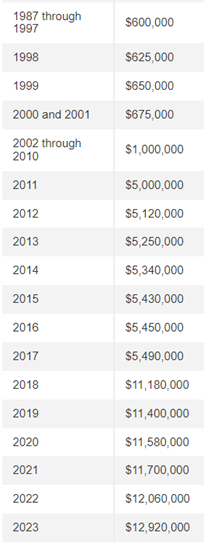
Ms. Backman goes on to tell us all the reasons why a grandparent may want to do this and why an outright inheritance, such as in a will, may not be the best idea. This is because a will can be contested during probate, delaying or reversing the intended result of the deceased. She also correctly discusses the benefits of a generation-skipping trust, especially if your net worth is such that you may be subject to an estate tax. But how many US citizens have a net worth more than the current $14MM exemption in 2025 requiring an estate tax return?
Research from The Population Division of the Bureau of the Census estimated that about 2.8 million people died in 2022. Thus, an estate tax return would have been filed for only about 0.25 percent of decedents, and only about 0.14 percent would pay any estate tax. Figures for 2023 were not much different, at around an estimated 0.2 percent paying any estate tax. How many people pay the estate tax? | Tax Policy Center
Furthermore, generation-skipping trusts can carry complexity and expense that many people may not want to deal with for a $500,000 inheritance to a grandchild.
Generation-skipping trusts are NOT a broad-based market solution for the other 99.8 percent of the population and there is no mention in Ms. Backman’s article of a solution as simple as a life insurance policy. What if the grandfather, with the daughter who might “take” the inheritance away from her child, did not have $500,000 to leave to his grandchild, but DID have disposable income and a DESIRE to create such a legacy.
How much would it cost a 65-year-old man to provide a $500,000 benefit to his grandchild? Well, it depends on his health, BUT let’s just say around $9,300 per year if he were in good health. If he were to tragically die immediately, it may have been the best investment that he ever made, returning 5,300% on his initial premium. A more logical answer, assuming he lived to a normal life expectancy of say age 85, is that it would cost $186,000 ($9,300 times 20) – which is a return of 8.7% on his premium dollars – tax-free to the grandchild.
But that is just the cost. The good news about a life insurance contract is that it avoids probate and is immediately available in cash to the beneficiary, versus other non-cash property. Furthermore, the beneficiary can only be designated or changed by the owner of the insurance contract, which in this case is the grandfather. The spendthrift daughter would have no control over the policy. The bigger challenge in this scenario is the age of the beneficiary.
If the beneficiary is a minor, the problem of parental control would still exist, requiring some sort of custodian or trust arrangement, both relatively simple solutions and likely best solved by a Revocable Trust established by the grandfather, which is infinitely simpler than a more complex trust such as a generation-skipping trust. At the death of the grantor of the trust, in this case the grandfather, the trust becomes irrevocable and the named trustee (possibly a corporate trustee or a trusted friend or relative) would have to act as a fiduciary for the grandchild.
If the grandchild were named a direct beneficiary without a trust, some might worry about a young man or woman having access to $500,000 all at once, which of course, the revocable trust could solve. But, I have another solution.
What if a life insurance policy rider was used to spread out the death benefit over a period of time? What if it was structured in such a way that the benefits were paid out in an initial lump sum plus an income stream for 20 years, as an example? (see chart below)
In the example above, the grandchild is provided with $100,000 at the death of the grandfather (the minimum initial payment), with an additional income stream of $20,000 per year for 20 years. Since the policy death benefit is provided in a pre-determined and structured manner, the grandfather does not have to buy the entire $500,000 policy. He can purchase a smaller policy of $425,480, reducing his premium payments to $8,150 as opposed to the original $9,300 per year, saving $1,150 per year.
Imagine if this income stream of $20,000 was provided each year on the grandchild’s birthday? What a powerful legacy for the grandfather who posed this question to Maurie Backman at Moneywise. What a shame that this idea was not even mentioned.
Please contact the AgencyONE Marketing Department at 301.803.7500
Welcome to 2025 and AgencyONE’s case design ONE Idea kick-off for the new year! Our October 2024 case design ONE Idea featured my interview with OneAmerica’s Regional Account Director for Care Solutions, Brian Shepard, CLTC, in which we discussed the carrier’s Hybrid LTC solutions. In that article, we noted that OneAmerica would be updating their individual and joint Asset Care options to further improve their competitiveness later that year.
This week’s ONE Idea will focus on those changes and the benefits the solution will offer your clients. The new version of the product will be referred to as Asset Care (2024)* and the previous version as Asset Care (2019)**. (This ONE Idea will not cover the specific California product. If you want to discuss that option, please contact AgencyONE).
Asset Care (2024) Benefits
Asset Care (2024) is available for both individual and joint life cases and allows your clients to be slightly rated in the underwriting process. OneAmerica’s hybrid solutions provide a monthly reimbursement benefit. The 2024 version is also better aligned with other carrier benefit periods, allowing AgencyONE to provide you with a more targeted competitive analysis for your clients’ cases. It also offers a 2-year Acceleration of Benefits (AOB) with a 2, 4, 6-year, or lifetime Continuation of Benefits rider (COB). This results in longer coverage – meaning the benefit period will run for 4, 6, 8 years, or lifetime.
OneAmerica’s Asset Care hybrid products remain theonly options in the market that allow a lifetime benefit period and can be added to both the individual and joint product offerings.
Asset Care (2024) Product Specs:
Issue Ages are 35-80 years for Single and Recurring Premiums.
Joint life has a maximum 25-year age difference between unrated joint insureds.
Premium payment options are similar to the 2019 product.
On the initial 2-year Acceleration of Benefit (AOB), single pay, 5, 10, 20, and pay to age 95 is available.
Continuation of Benefits Rider (COB):
This rider covers the costs of extended qualifying care. The Continuation of Benefit rider (COB) must match the AOB premium mode.
Premium cannot increase, and the policy owner can continue this rider as long as premiums are paid on time.
Rider benefits start after the base policy long-term care benefits reduce to zero.
On a joint policy, the lifetime benefit applies to both insureds for one premium rate.
Clients can pay on a single-premium, 5-pay, 10-pay, 20-pay, or lifetime (pay-to-95) basis depending on their funding choice.
Continuation of benefits can be added to any Asset Care base policy with an additional premium at application.
Inflation protection and nonforfeiture benefits may also be available for an extra premium. Note that international facility and care coordination benefits are not available with the continuation of benefits rider.
Inflation Rider – Three Options & Two Durations:
Options include 2%, 3%, or 5% compound interest for 20 years or lifetime. If selected for both the base coverage and COB Rider, the interest rates and duration must match. If electing base Inflation Protection Rider (IPR) you must also select COB IPR, however you can select COB IPR without including it on the base. The premiums are guaranteed never to increase.
Single Premium Drop-In Rider:
The Single Premium Drop-In Rider allows clients to make up to two additional premium drop-ins (minimum: $10,000; maximum: $100,000) within six months of policy issue, however the face amount available with this rider may not exceed $250,000. Clients are underwritten for the assumed total face amount including initial premium and all drop-ins. Note:The Single Premium Drop-In Rider is available only with the recurring premium whole life funding option.
Benchmarking Hybrid LTC products can be difficult as case designs are all over the place with different age limits, pay periods, benefit periods, and inflation options. For comparison purposes, AgencyONE runs all 4 of our carrier partner options (Lincoln, Nationwide, OneAmerica and Securian) for our cases. It is, however, easier to benchmark the new OneAmerica product with the same benefit periods and, as a bonus, OneAmerica offers a lifetime benefit period while the other carriers do not.
Contact the AgencyONE case design department at 301.803.7500 for more information or to discuss a case.
OneAmerica UW and Sales Process Guide is attached HERE for your reference. (link to be added).
*Asset Care 2024 – Updated Product Offering: Alabama, Alaska, Arkansas, Colorado, Georgia, Hawaii, Idaho, Illinois, Iowa, Kansas, Kentucky, Louisiana, Maine, Maryland, Massachusetts, Michigan, Minnesota, Mississippi, Missouri, Nebraska, Nevada, New Hampshire, New Mexico, North Carolina, Ohio, Oklahoma, Oregon, Pennsylvania, Rhode Island, Tennessee, Texas, Utah, Vermont, Virginia, Washington, West Virginia, Wisconsin and Wyoming.
**Asset Care 2019: Arizona, Connecticut, District of Columbia, Delaware, Florida, Indiana, Montana, New Jersey, North Dakota, South Carolina and South Dakota.
As another year comes to a close, we pause to reflect on 2024 and find that reviewing our ONE ideas helps us to evaluate the last 365 days. Our ONE Ideas convey what is happening in the industry and what is on the mind of our AgencyONE 100 advisors and their clients and are an important part of our communication to our advisors.
2024’s ONE Ideas presented interesting advanced market concepts, case design scenarios, and underwriting information and case studies. We are pleased to provide this annual review and hope that it offers you some insight, answers, and/or ideas for your existing or future cases.
Remember: any of the following ONE Ideas may be customized to be business and/or client-facing for our AgencyONE 100 advisors.
Business Planning / Sales Ideas
A 2023 Review & My 2024 Predictions – Jan. 23 At the beginning of the year, Gonzalo Garcia, CLU highlighted some key items that emerged from previous years that might continue to create both opportunities and challenges in 2024: higher interest rates on products, annuities, the Great Wealth Transfer, and more. He also included his personal 2024 predictions for each category. We encourage you to review this ONE Idea to see how his predictions for the year measured up!
Our Financial Planner Said We Didn’t Need Our Life Insurance When We Retired…Then My Husband Died – Feb. 16 In this ONE Idea, Gonzalo analyzed an article in Kiplinger Personal Finance by Evan T. Beach, CFP, AWMA about the author’s perspective and answer to the question “If You’re Retired, Do You Still Need Life Insurance”? Gonzalo poses some questions to consider when contemplating the use of permanent life insurance during retirement and his opinion on the original article.
A Financial Wellness Primer – June 7 The models of wellness have 6 dimensions, but The National Institutes of Health adds another: The Financial Dimension. In this article, Gonzalo focuses on financial wellness, how to maintain it, and highlights the types of insurance that contribute to one’s overall financial wellness: Health Insurance, Long-Term Care Insurance, Life Insurance, and Disability Insurance. You must read this article!
The Best Laid Plans of Mice & Men: Generational Wealth Planning – Dec. 13 As generational wealth professionals, in collaboration with attorneys, accountants, and other financial advisors, best intentions for clients can sometimes go awry. This piece discusses: the causes based on study conclusions, dynastic and purposeful planning, the option of having a family treasury, and more.
Estate & Tax Planning
Retirement Planning: It’s All About Taxes – May 9 In this ONE Idea, Gonzalo Garcia, CLU discusses the role that taxes play in determining how much money there will be in retirement and the planning that is required to help maximize what is kept and minimize what is paid in taxes. Learn about the various “buckets” and the retirement mistakes to be avoided.
Is Your Client’s IRA an IOU to the IRS? – Sept. 5 Gonzalo discusses the taxable income that is created by clients with IRAs and 401K distributions and the alternatives that can be considered by financial planners and their clients who are willing to embrace them. He goes on to say that any advisor who wants to do “right” by his/her clients has complete transparency into their taxes, considers account tax cost ratios when making recommendations and reviewing portfolios, and recommends solutions that address present & future taxes.
Accessing Home Equity for Financial Alternatives – Nov. 11 This article focuses on a new program – CHEIFS – available to advisors with clients who want to consider accessing their home equity for financial planning alternatives such as life insurance. Converting Home Equity Into Financial Success (CHEIFS) is offered by Cornerstone Financing, an insurance and investment funding company, and presents a huge opportunity for financial advisors to have a new and different conversation with clients. This is NOT a reverse mortgage conversation; this is a totally new offering and a MUST-READ ONE Idea!
Case Design & Product Intelligence
LTC/Chronic Benefits Using 1035 Funds – Feb. 23 This ONE Idea by Ed Stark, CLU, ChFC highlights the undeniable value and huge potential in doing regular policy reviews with your clients. This article drives that very important message home and discusses a case that resulted in success for both the client and the AgencyONE 100 Advisor. Make sure to check this out!
Hybrid/LTC Products & LTC Rider Options: The First in a Series of ONE Ideas – Apr. 22 In this ONE Idea, Ed discusses Hybrid/LTC products, their rider options, and what’s available in the marketplace. He focuses on Lincoln, Nationwide, OneAmerica, & Securian and their basic product specs and features. Make sure to read this informative article to help you determine which carrier & solution is best for your clients’ needs.
Hybrid/LTC Products & LTC Rider Options: Part 2 – Lincoln Financial – May 22 In the second in a series of articles about the subject, Ed takes a deeper dive into Lincoln Financial’s Hybrid LTC solutions through an interview with Lincoln MoneyGuard’s VP, Timothy Lockwood, RICP, CLTC. Have a look to find out what sets MoneyGuard apart from other solutions, its target markets, the most popular designs, product niches, and more.
A Pacific Life Solution You Need to Know About – Horizon IUL 2 – Sept. 27 In this product-specific article, Ed highlights an exciting IUL solution from Pacific Life. The Horizon IUL 2 replaces two of their previous products making it much easier for advisors to choose the correct option for their cases.
Hybrid/LTC Options Now Available & Overview of New Upcoming Changes at OneAmerica – Oct. 15 The popularity of Hybrid/LTC options continue to grow. Carriers are increasing product flexibility and improving options as consumers prioritize this kind of coverage. In this article – part of the series on Hybrid/LTC solutions – Ed focuses on OneAmerica’s options in the category – what sets OneAmerica apart from other carrier solutions, what is the target market, what is the most popular design, and details on annuity care.
Selling Term: Lowest Cost, Comparable Cost or Higher Cost with More Benefits? – Nov. 22 Term insurance continues to be a popular choice for many clients, however, it is important to review term comparison sheets to really understand the difference between product solutions and the pricing variations. Ed explores sample cases and breaks down the details from comparison sheets in this very informative piece of product intelligence.
Underwriting
Prostate Cancer: Forget the Defense…Let’s Go on Offense – Jan. 12 Dennis Bartos, PA began 2024 with a ONE Idea that discussed Prostate Cancer – what it is, its diagnosis, treatment, and how it is underwritten at AgencyONE and the carriers. It also includes two very real case studies that show how AgencyONE evaluates these cases.
Coronary Artery Disease (Part 1) – Mar. 6 In this first of a two-part series of ONE Ideas, Dennis focuses on Coronary Artery Disease (CAD) and discusses: what it is, the methods for diagnosing CAD, the inherent risk factors underwriters assess, a case study, and how an informed AgencyONE 100 Advisor and their clients can help to positively affect the outcome of their cases.
Coronary Artery Disease – Diagnosing & Underwriting the Risk (Part 2) – May 17 In this second part of the CAD ONE Idea series, Dennis provides a recap on the disease and poses specific questions and answers about CAD that are designed to improve your field underwriting knowledge. Be sure to review this ONE Idea to brush up on Coronary Artery Disease.
Is Life Insurance Possible After Skin Cancer – June 17 Dennis discusses the most common cancer in the US in this ONE Idea – skin cancer – the chances of getting it, the types of skin cancer including the most dangerous kind, what AgencyONE is seeing during underwriting, 2 real case studies, and how they were underwritten. You will want to read this article for all the details!
Memory Loss – Do I Have Alzheimer’s? – Sept. 19 In this article, Dennis talks about the difference between normal age-related memory loss and more severe conditions such as mild cognitive impairment (MCI) or the even more concerning disease of Alzheimer’s. He goes on to discuss diagnosis, how the conditions are treated and underwritten, and real case studies. There is a lot of excellent information in this article for your older age clients!
I’ve Read About Them, But Should I Get a Total Body Scan? – Oct. 25 In this article, Dennis explores total body scans, their growing popularity with the general public, when and if they are a good preventative health screening, how their existence can affect underwriting, and a case study for a client who had one. This is a must-read.
3 Important Underwriting Reminders for Year-End & Beyond – Nov. 14 With the rush to year-end, Dennis thought it important to reiterate some important underwriting reminders about routine physician appointments when your client is in underwriting, the importance of using Accelerated Underwriting Programs (AUP) where applicable, and the important client-facing materials that are available to your clients to help them sail through the underwriting process. This is a must-read article for any time of year!
Annuities
AgencyONE’s 2024 Annuity Outlook – Feb. 9 In this ONE Idea, Craig Baumgartner, RICP discusses the increased activity among our AgencyONE 100 advisors and their clients in the annuity space in 2023 and how the interest rate environment continued to propel annuity sales. He discussed what experts thought 2024 would bring for annuities and reminded readers that if you are still not talking to your clients about annuities, someone else will. It is important to continue to educate yourself about annuities so that you do not leave opportunities on the table!
Hidden 1035 Opportunities: Don’t Miss Out on Creating Joint Benefits – Mar. 15 In this ONE Idea, Craig explores some lesser-known opportunities and the rules and workarounds available for your clients who want to create joint benefits by exchanging an existing individual policy via a 1035.
In July we announced our new annuity offerings and newest resource to AgencyONE’s annuity team, Sal Sigleski, due to our partnership with Brokers Service Marketing Group (BSMG), which resulted from our acquisition by the Specialty Program Group (SPG). This partnership has enabled us to dramatically improve the Annuity Services we offer our AgencyONE 100 advisors. For more information, please view the original announcement HERE and be on the lookout for an upcoming webinar with Sal on how he and his team will help you STREAMLINE & GROW your annuity business.
Marketing
Does Your Business Have a Social Media Presence? A Platform that Makes it Easy – Mar. 25 In this ONE Idea, Lisa Mitchell discusses the popularity of Social Media marketing for businesses and how the practice can reach a wider audience and build relationships while deepening existing ones. Social Media marketing has become the most popular way to market, but a business needs to consider a number of things before taking the leap. Read this ONE Idea to find out what those things are and about a platform that helps.
We wish you and yours a happy, healthy, and safe holiday season and a New Year full of blessings, possibility, and prosperity!
AgencyONE looks forward to providing more terrific content in 2025. Please contact our Marketing Department at 301.803.7500 for more information or to discuss a case.
“This fabled golden era, this special world of luxury and privilege that the Vanderbilts created, lasted but a brief moment. Within thirty years after the death of the Commodore Vanderbilt in 1877, no member of his family was among the richest people in the United States…. When 120 of the Commodore’s descendants gathered at Vanderbilt University in 1973 for the first family reunion, there was not a millionaire among them.” – Arthur T. Vanderbilt II.
When Cornelius Vanderbilt died at age 82, he left the bulk of his fortune, estimated at more than $100 million in 1877, to his son William. Generational wealth, often viewed as a family legacy, is surprisingly fragile. Without intentional planning, even substantial fortunes, like that of the Vanderbilts, can vanish in a few generations. How can this happen?
The Problem
The best-laid schemes o’ mice an’ men,
Gang aft a-gley,
An’ lea’e us nought but grief an’ pain,
For promis’d joy.
Modern English translation – “The best laid plans of mice and men often go awry, and leave us nothing but grief and pain, for promised joy”.
As Scottish poet Robert Burns aptly notes in his 1786 poem To a Mouse, ‘The best-laid plans of mice and men, often go awry’. For many families, well-constructed wealth transfer strategies fail to deliver the intended legacy, leaving grief and disappointment instead.
As generational wealth professionals, in collaboration with attorneys, accountants, and other financial advisors, our best intentions for clients “gang aft a-gley”. In fact, they go awry so often that one must question if there is a better way to accomplish generational wealth planning. According to a 20-year study of 2,500 families by The Williams Group and another extensive study of 750 families by the Miami of Ohio School of Business, fully one-third of generational wealth transfers fail beyond the first generation. Research from a variety of sources indicates that the failure rate can be over 90% by generation three.
When looking for causes of this, the Williams study concluded that only 5% of the failures were the result of poor governance, legal, tax, or investment advice. The other 95% was caused by:
Breakdown of family communication and trust – 60%
Inadequately prepared heirs – 25%, and
Failure to establish a family mission – 10%.
The Importance of Purposeful Planning
Suppose only a 5% failure rate lies in governance, legal, tax, and investment advisory services. In that case, we must become more purposeful in our planning by addressing the reasons noted above for 95% of planning that fails. Isabel Miranda, JD, Managing Partner at Pearlman & Miranda, LLC with offices in Newark, New Jersey, and New York, New York defines purposeful planning as “expressing your wishes in a way that is driven – not by tax laws and financial wealth – but by enduring wealth. Purposeful planning is about your family and the values and philosophy that you engender and embody.” I interpret this as a focus on a family’s core values, shared experiences, sound financial stewardship, and charity to others. Mrs. Miranda continues by stating “to accomplish this, we need to work with our clients to capture their essence in a meaningful way and reflect that in their estate plans.”
Bob Larkins, CLU, ChFC and Accredited Estate Planner (AEP) in Dayton, Ohio comments that “generational wealth planning is not a legal exercise, it’s not a financial exercise; it’s an emotional exercise with legal and financial consequences”. I would emphasize that these legal and financial consequences, if gone awry, can be devastating to individual family members and entire families.
Generational Execution – A Long Game
When planning for many generations, possibly hundreds of years, with tools such as multi-generational or dynastic trusts, due diligence is required to ensure that the wishes of the founding family members are honored well past their lifetime and that the connection to their value system and desires be maintained. It is critical that long-term governance be considered.
“An independent corporate trustee can play many extremely important roles for perpetual family enduring wealth” states Al W. King, III, the Co-Founder, Co-Chairman, and Co-CEO of South Dakota Trust Company. He goes on to say that “the independent corporate trustee not only assists the family with many of the administrative tasks associated with a perpetual trust but also acts as a great mentor, sounding board, and arbitrator for the family. Additionally, an independent corporate trustee located in one of the modern trust states (i.e., DE, NV, SD, or WY) can provide a family and its perpetual trusts with tax benefits, asset protection, control, and flexibility regarding trust investments and distributions, assist with the promotion of family values intergenerationally, privacy and much more.”
Independent corporate trustees for a perpetual trust generally operate within a “directed trust” fiduciary structure which provides a collaborative relationship among the family, family advisors, beneficiaries, and the independent trustee. Multiple trustees/fiduciaries and managers assume duties generally assigned to a single trustee. This structure leverages specialization of function regarding trust investments, distributions, custody, and administration combined with active family and family advisor involvement. Consequently, an independent corporate trustee can protect a family’s goals and purpose in perpetuity.
Dynastic Planning
Athos, Porthos, Aramis, and d’Artagnan’s motto “all for one and one for all” in the famous Alexandre Dumas novel, The Three Musketeers, simply means that every individual acts for the benefit of the group, and the group should act for the benefit of every individual.
Most planning involves each family in a generation creating a trust or series of trusts for the benefit of their direct descendants, as each family unit will have unique needs, goals, and circumstances, leading to a distinct but often shared family mission.
Multigenerational or Dynasty trusts will ultimately hold a multitude of family assets such as business interests, managed investment portfolios, family homes, commercial real estate, life insurance, and other assets, for the benefit of the intended beneficiaries of said trust. These assets, which are protected from creditors and shielded from wealth transfer taxes, will serve as the income-generating tool for distributions to trust beneficiaries.
There is another factor to consider, however, which is just math.
As the chart above indicates, after several generations, the beneficiaries will no longer be closely related to the grantor. A child of the grantor will be related 50%, a grandchild, 25%, a great-grandchild, 12.5%, so that by the 6th generation, the beneficiary only has a 1.6% relationship with the grantor, and that relationship continues to halve with each successive generation. Intentionality as to governance, the communication of family values and mission, and the preparation of heirs are critical to long-term success.
By the same reasoning, the trust income or property must be divided among more and more beneficiaries. If the grantor and each beneficiary have 2 children, then there will be 64 beneficiaries in the 6th generation. Unless there is adequate governance and stewardship and a constant replenishment tool, the wealth, as with the Vanderbilts, will dissipate.
The Family Treasury – Constant Replenishment
The Family Treasury, which is an Insurance Limited Liability Company, takes the Three Musketeers motto into the multigenerational family setting. It is established for the sole purpose of executing the “all for one and one for all” mindset.
Trusts can invest a portion of their assets, via capital contributions, into a “Family Treasury” which does nothing more than own life insurance on all living members of the family, by birth or by marriage, in equal amounts. Over the generations, each family trust benefits equally from the life insurance proceeds. The life insurance serves as the great equalizer for the benefit of the “all” by replenishing wealth for subsequent generations.
Why life insurance?
Life insurance is a non-correlated asset relative to the other investments in the family portfolio.
It is always worth 100% of face value at the death of the insured regardless of market cycles (equities, debt, real estate, commodities, etc.).
It is converted to cash at death providing immediate liquidity.
Cash value grows on a tax-deferred basis and can be invested in a variety of asset classes (equities, bonds, cash equivalents, etc.) if desired.
Cash value can be used as collateral for borrowing purposes.
Death benefits are income tax-free and, if properly owned, estate tax-free.
In this setting, the descendants who are investment bankers and neurosurgeons are as “valuable to all” as the descendants who are elementary school teachers and Peace Corps volunteers. Family members can be empowered to pursue their life’s goals and passions without fearing great wealth disparities over the generations and can contribute in their own unique way to the family mission, value system, and stewardship.
With Purposeful Planning, Generational Execution, and a Family Treasury, the chances of generational wealth, both enduring wealth and financial wealth, increase dramatically.
For more information on The Family Treasury or to discuss a case, contact Gonzalo Garcia at 301.910.1234 or gonzalo@agencyone.net. Our goal is to work in a collaborative way with other legal, tax, trust, financial, and insurance advisors.
How many advisors are actively selling term insurance? I would venture to say that nearly every insurance advisor has sold a term policy at some point in the past year. While you may not believe term is the ideal solution for your client, the competitive cost can provide essential protection as they build their estate. Therefore, it is important not to overlook term insurance as a vital component of a client’s financial strategy. Additionally,securing a client’s insurability has always been a key benefit of term insurance.
AgencyONE’s case design team has been receiving an increasing number of inquiries about term products. Some questions pertain to additional riders and features, while the majority focus on conversion options and age limits. Currently, there are carrier products with limited or no conversion options that come at a lower price. However, be sure to reviewterm comparison sheets to understand the differences between products. A minimal cost increase may add benefits and therefore enhance value to your client. Let’s explore some sample cases and break down the details from the comparison sheets.
Below are the findings from a $1M 20-year term sheet for a 45-year-old male client, assuming Preferred non-tobacco (NT) status.
Carriers A, B, C, D, and E all offer a premium of approximately $1,192 per year (with very minor price differences).
Carrier F shows a premium of $1,199 per year.
All carriers listed have A to A+ AM Best ratings and provide E-App options, with some offering Accelerated Underwriting Programs – AUPs (more details on that later). While you might be tempted to choose the lowest cost option and start the application process immediately, we recommend you and your client explore the solution fully to understand what you are getting for the premium:
Carrier A allows conversion throughout the term or up to age 70, whichever comes first. They offer a Conversion Specific Guaranteed UL with limited flexibility, priced higher than fully underwritten GUL products.
Carrier B provides conversion for 18 years, allowing ANY product for the first 5 years, then switching to a product specifically designed for conversions in years 6 and beyond. For a higher cost (increase from about $1,192 per year to $1,492 per year) you can add a conversion extension rider that includes an option for a chronic rider when converted to the permanent product. This option requires advanced underwriting.
Carrier C offers a conversion option for 10 years to a specific product available in the state of sale.
Carrier D allows conversion to ANY product for the first 10 years, followed by a conversion-specific option for years 11-20.
Carrier E does not provide a conversion option at this price on the base term product unless your client purchases an extended conversion rider, raising the price to $1,337 – still competitive among top options.
Carrier F allows conversion to a conversion-specific GUL for the full 20 years.
These six carriers present varying conversion options, with premium costs closely aligned. If underwriting is similar for all six, which option would be the best choice?
When selecting a product based on price, benefits, and conversion options, prioritize carriers with the best AUPs. Accelerated underwriting offers clients and advisors the opportunity to have a policy issued very quickly – sometimes within minutes from application to issue – assuming they meet the program requirements.
Qualification for carrier accelerated programs depends on the client’s age, current health, and the death benefit requested. If a client meets all requirements and the application proceeds smoothly through the accelerated program, they may bypass the need for an exam or wait for APS records. Even if a client gets “bumped” from the accelerated program to standard underwriting, their policy could still be issued more quickly simply because they began in the accelerated process.
Several carriers are now considering fluidless programs for older applicants (over 50), provided they have undergone a comprehensive exam and lab tests with their physician in the past year. The maximum face amount for many of these programs has increased and may continue to rise. Some processes can now be fully digital from beginning to end, enhancing the overall customer experience, and expediting the underwriting process further.
For any questions regarding conversion options, please reach out to the AgencyONE case design team. We are here to help you select the best solution and work with new business and underwriting to identify the ideal fit for your clients.
Contact the AgencyONE Case Design Department at 301.803.7500 for more information or to discuss a case.
The rush to year-end is on. While there is still plenty of time to place your business, AgencyONE thought a reminder of sorts would be helpful in getting your cases successfully placed before the carrier deadlines.
Reminder #1 – Routine Physician Appointments
Consistent medical care is of utmost importance, but your clients must be especially mindful when scheduling those routine appointments during the underwriting process.
Advisors should recommend that their clients only see their doctors for cause (to treat an ailment, illness, or accident) and hold off on any routine checkups or testing until AFTER underwriting is complete and the policy is placed.
ANY visit to the doctor or test is considered achange in healthfor underwriting purposes. The underwriter is required to obtain any information about an updated office visit or a test before your client can be cleared and the case placed. A routine doctor visit can negatively affect the outcome of the case by possibly:
Downgrading the underwriting rating;
Causing a postpone; or
Resulting in a decline in your client’s case.
AgencyONE recently had a case with a policy in the field, but not yet placed, when the client visited the doctor for a routine checkup. This required that we retrieve the results which showed an elevated A1C of 6.2. This client is now considered Prediabetic and is in danger of losing the PREFERRED BEST policy protection that was issued before the routine physician visit and testing occurred.
Reminder #2 – Accelerated Underwriting Programs
Accelerated underwriting is NOT just for your term or small cases anymore. Accelerated underwriting requirements continue to change. Carriers are raising face amounts, digitizing the entire process, delivering policies electronically and drastically lowering the time from app to issue. If you have not taken advantage of these programs, NOW is the perfect time to try! Stay up-to-date by referring to the AgencyONE Carrier Accelerated Underwriting Sheet under the New Business & Underwriting tab on your personal Advisor Dashboard.
Reminder #3 – Client Facing Materials
We cannot emphasize enough the importance of educating your clients on the underwriting process and the necessary steps to ensure their policy is placed as planned. Communication is key throughout underwriting.
AgencyONE has created a variety of client-facing materials for our AgencyONE 100 advisors to share directly with their clients. We have videos and easy-to-understand written one-pagers to help you and your clients better understand the detailed insurance and underwriting process.
These helpful materials are on the AgencyONE website under your “Advisor Dashboard” and the” For Client Use” dropdown. They include Exam Prep, Interview Prep, Senior Supplement, and Inspection Report Prep. We encourage you to use these materials with all your clients, where applicable.
Only 44 days to year-end! (At the time this ONE Idea was published)
Please contact AgencyONE’s Underwriting Department at 301.803.7500
My wife and I own a lake-front house, and we love spending time there. However, our two adult children rarely enjoy it for a variety of reasons. I am sure they will sell it when they inherit the house. The house has no mortgage and during the pandemic, like so many vacation homes, the value of the home grew significantly. Will that growth trajectory continue? The house is currently worth approximately $1.5MM and we would pay hefty capital gains taxes if we sold it for cash to reinvest in other investments or financial products.
CONSIDER A NUMBER OF WHAT IF’S:
WHAT IFwe could, instead, take $500,000 of value in that home and invest it in a managed account that will outperform the historical growth of the property? A comparison from 1945 to the present day shows that the normalized historical returns of the Case Schiller Home Price Index was 4.87% versus 11.07% for the S&P 500. Sounds like good arbitrage to me!
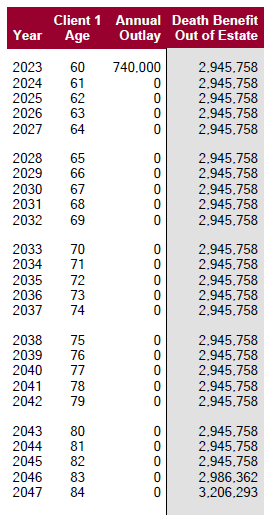
WHAT IF we could arrange for our children to receive a $2.9MM income and estate tax-free payment PLUS their share of the home’s remaining equity value at our death by taking the $500,000 of equity out of the house today? I am referencing a single premium Survivorship Life (Second-to-Die) Insurance policy. At life expectancy (ages 89/84) the insurance alone is a 7% tax-free return.
WHAT IF we could turn that $500,000 into a guaranteed income stream by purchasing an immediate income annuity to supplement retirement income?
WHAT IF we could create a longevity hedge via the purchase of a deferred income annuity with payments starting at a future date?
WHAT IF we could purchase guaranteed long-term care benefits, or a combination of life insurance with long-term care benefits, or an annuity with long-term care benefits?
The planning options to use dormant equity in a primary or secondary home are endless.
This is NOT a Reverse Mortgage conversation; this is a totally new offering that many of our readers have never heard of. More later.
According to a 2024 Board of Governors of the Federal Reserve report, there is $31 trillion sitting in home equity in the United States which represents a significant percentage of overall household net worth across all ages.
This brings us to a new financial product that focuses on this unused home equity asset.
Introducing Converting Home Equity Into Financial Success or CHEIFS offered by Cornerstone Financing, an insurance and investment funding company. CHEIFS presents a huge opportunity for financial advisors to have a NEW AND DIFFERENT conversation with clients about using their dormant home equity to achieve meaningful financial planning results. It also provides financial advisors with a unique product that enhances their toolkit!
As I said before, this is NOT a reverse mortgage. CHEIFS is structured as a minority fractional investment in residential real estate requiring NO interest or principal payments. There is no personal liability for payment of the homeowner’s obligations under the agreement (non-recourse). This allows the homeowner to continue to live in and\or enjoy their home without the burden of monthly payments, using the equity taken to purchase financial products resulting in a more holistic financial plan. It provides access to tax-free cash with no debt service requirement, resulting in a highly efficient cost of capital. The homeowner continues to enjoy all utility benefits of homeownership, remaining completely in control while sharing some of the economic benefits with Cornerstone.
In a Point Research survey in April 2023, when asked the primary reason homeowners won’t use a loan (like a reverse mortgage, cash-out refinance, or a home equity line of credit) to pay for home updates, the primary reason, 38.9% of respondents, was “I want to be debt free”.
A CHEIFS transaction is an equity participation in the property based on a predetermined formula, with a cap on the equity percentage.
Conversely, a reverse mortgage is a loan in which borrowed money PLUS interest PLUS fees each month create a rising loan balance. The homeowner or their heirs will eventually have to pay back the loan, usually by selling the home, and often, little to no equity remains to share with the heirs.
The market for Home Equity Investments has exploded, as noted by head of securitized products at Barclays Bank, Mark Ginsberg.
An October 30th WSJ article stated that “private equity giant, Blackstone, began spending hundreds of millions of dollars on family homes that went into foreclosure after the 2008-2009 financial crisis, creating a completely new asset class for institutional investors”.
Cornerstone Financing, the developer of CHEIFS, recently announced that they had secured $285 million in aggregate financing through global finance firms Aquiline Capital Partners LP and Nomura.
The press release goes on to state that “a new funding solution for insurance and financial advisors revolutionizes the home equity landscape by augmenting the evolving financial toolkit for advisors and homeowners”.
CHEIFS is currently approved to do business in Pennsylvania, California, Arizona, Florida and Virginia with more states to follow.
Imagine a planning process that releases dormant home equity for use in investment and protection solutions without monthly payment or debt. Imagine a planning process where required cash is readily available, leaving fee-generating AUM intact, existing cash on hand and liquidity remains in place. Imagine a planning process where the funding conflict or challenge often presented when trying to purchase insurance and annuity products is eliminated. This is CHEIFS!Imagine what it can do for your customers and your advisory practice.
AgencyONE held a webinar with the creators of CHEIFS, during which they explored this unique program in further detail. Watch the replay of the webinar HERE!
Please contact AgencyONE at 301.803.7500 for more information about CHEIFS or to discuss a case.
Should you get a total body scan, either CT (Computed Tomography) or MRI (Magnetic Resonance Imaging) as a preventative health screen? While prevention is a good thing, these sophisticated tests are very sensitive to any abnormality. In this ONE Idea, we will discuss the difference between a CT and an MRI, what you should expect from the results, and explore a Case Study. If you have health concerns, then yes, you should have one completed but consider the timing. Is NOW the right time?
As the costs of these detailed imaging tools have dropped, there are more centers popping up to offer health screening and total body imaging scans that can be performed without medical necessity or a doctor’s order. All you need is money! These screening results can be a valuable tool in early detection of health issues before symptoms arise. Each of these studies has their own merit and each is extremely sensitive. In fact, they have coined the phrase “incidentalomas,” since they so often pick up incidental findings in the lungs, liver, and kidneys. If an abnormality is found, follow-up imaging or further testing needs to occur to confirm that the finding is in fact “incidental” and not a small pathologic growth. These findings can put the underwriting process for life insurance on hold until the follow-up testing or a further work-up rules out any mortality concern.
Timing is very important! It is better to get your life insurance policy in place prior to scheduling any total body screening MRI or CT scan. That just makes good practical sense!
Can These Scans Find Cancer?
The answer is yes, but they can also miss a small cancer so just getting a total body scan that is reported as negative should not relieve you of other routine cancer screening tests like a colonoscopy, pap, or mammogram.
What is the Difference Between a CT Scan and an MRI?
While both procedures are painless, the CT scan is faster and can be completed in less than 20 minutes. A CT scan involves radiation (like an X-ray), while an MRI involves radiofrequency waves and magnets so there is no radiation risk. The MRI is highly sensitive in imaging soft tissues, swelling, and tumors but takes nearly an hour and requires the patient to remain perfectly still. While that sounds tough, the facility will give you headphones that play music and sometimes a TV to distract you as the shifting magnets can be very loud and disconcerting.
Should I get a Total Body Scan?
Well, that decision is up to you. A total body scan, either CT or MRI, can offer you a comprehensive picture of your overall health and can identify early signs of disease before any symptoms present themselves. It can certainly be reassuring to have a “clean” total body scan but the sensitivity of these studies along with the incidental findings, can cause concerns for life insurance underwriters when any abnormalities show up.
Coronary Calcium Scores
A total body CT scan can document a coronary artery calcium score but only a more focused chest CT angiogram can quantify the calcium deposits and pinpoint their location – inside thecoronary arteries or within the coronary artery walls. The calcium score is believed to correlate with coronary artery disease and that a higher calcium score presents as more risk for underwriting. However, we have seen high coronary artery calcium scores that do not represent coronary artery blockages of any blood flow because the calcium deposits occur inside the artery walls, and not inside the artery lumen.
While the coronary calcium score is a flag, it is not a diagnostic test. Further studies are often needed to determine this. It is certainly good preventative care to aggressively monitor anyone who has an elevated coronary calcium score with cardiac stress testing, echocardiograms, or other diagnostic tests. Elevated coronary calcium scores present underwriting issues for sure.
Total body imaging studies, either CT or MRI, will give you a significant amountof information about your body. These tests can help your physicians detect serious diseases like cancer at early stages when they are more easily treated and potentially cured. However, these studies present underwriting concerns because of their sensitivity and often require 6-month or 1-year follow-up studies to see if any “changes” in the images have occurred. The best advice is to get your life insurance protection in place before having these screening studies performed! Once the life insurance protection is in effect, the testing can be done and, if normal, AgencyONE can go back into underwriting on the policy anniversary for a potential upgrade in the underwriting class with this new and comprehensive information.
Case Study
Mr. Jones applied for a large policy. He receives top-shelf concierge medical care that includes multiple screening tests for preventative care and longevity enhancements. One of these studies was a thyroid ultrasound that found a small growth (incidental), that was too small for biopsy criteria. His medical record shows a chart note for a follow-up repeat study in 1 year. That was 5 years ago, and Mr. Jones has had no specific thyroid follow-up. Since then, the client has had a total body MRI and a Galleri early detection cancer test* (a revolutionary and simple blood test that screens for over 50 cancers) that revealed no cancers, but the Galleri test does not include thyroid-specific testing yet. However, the Prenuvo Whole Body MRI scan from 8 months ago became a valuable tool in this underwriting process. The medical director at the carrier downgraded this risk to a STANDARD rate class (from Preferred BEST initial consideration) since no follow-up thyroid ultrasound was performed, and would not budge without a repeat test. AgencyONE pointed out that a total body MRI was performed within the past 12 months with no abnormal findings in the thyroid portion of the MRI report. We emphasized that an MRI is much more sensitive than an ultrasound. The file was reviewed again and finding no abnormality in the thyroid as we noted, the Medical Director allowed the case to be issued for $25 million at a PREFERRED BEST rate class!
AgencyONE is well-versed in the newest diagnostic technologies. We are available to help you and your clients navigate these new direct-to-consumer tests and to understand the consequences of having them.
Please contact the AgencyONE Underwriting Department at 301.803.7500for more information or to discuss a case.
*TheGalleri early detection cancer test is a blood test that can detect more than 50 types of cancers – many of which have no other available diagnostic screenings yet. With a negative Galleri screening result, an insured can get life insurance underwriting credits for good health! This innovative test is available to our AgencyONE 100 advisors at a deeply discounted rate. Please contact the Marketing Department at 301.803.7500 for more information.